The Bridge Edition 01
Executive briefing for diabetes leadership
A prescription is not a diabetes education plan. Why culturally relevant, structured diabetes education is essential to helping people manage diabetes in the realities of everyday life.
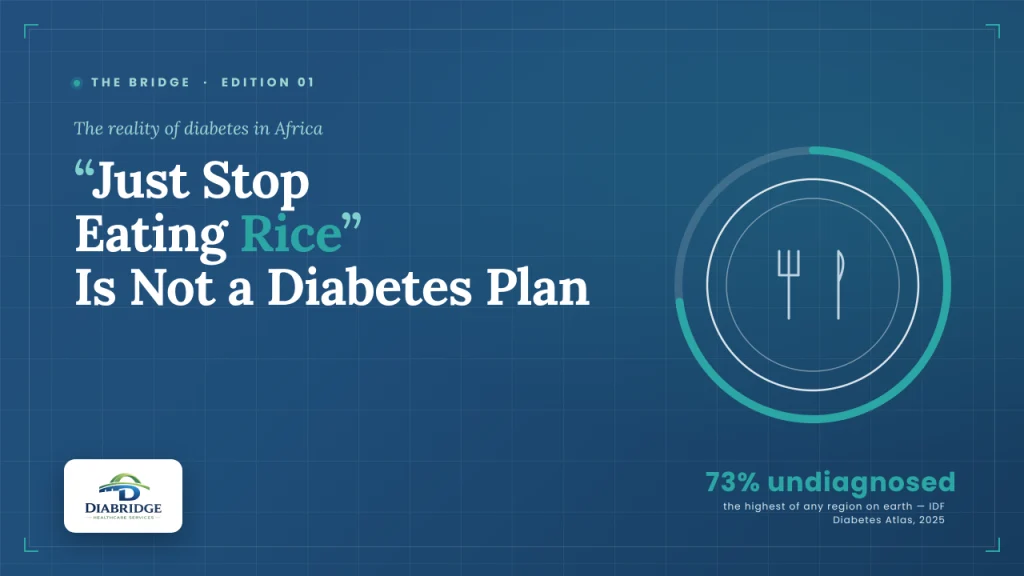
What the world’s fastest-growing diabetes crisis is really missing – and it isn’t medicine.
She left the clinic with a prescription, a glucose meter she didn’t know how to use, and four words: “Avoid sugar and carbohydrates.”
Then she went home, to a kitchen built on rice, yam, garri and plantain. To a family table where jollof is love and pounded yam is Sunday. To a budget where “just eat more lean protein and fresh vegetables” is a sentence written by someone who has never shopped in her market.
When she came back months later, with numbers far worse, the note in her file said she “wasn’t compliant.”
She wasn’t non-compliant. She was un-taught.
This is the part of the diabetes story we don’t talk about enough.
We talk about access to insulin. We talk about screening. Both matter, enormously. But underneath all of it sits a quieter failure: people are diagnosed, then left to manage a complex, lifelong condition with a diet sheet that was never built for their plate, their pocket, or their life.
And the scale is staggering.
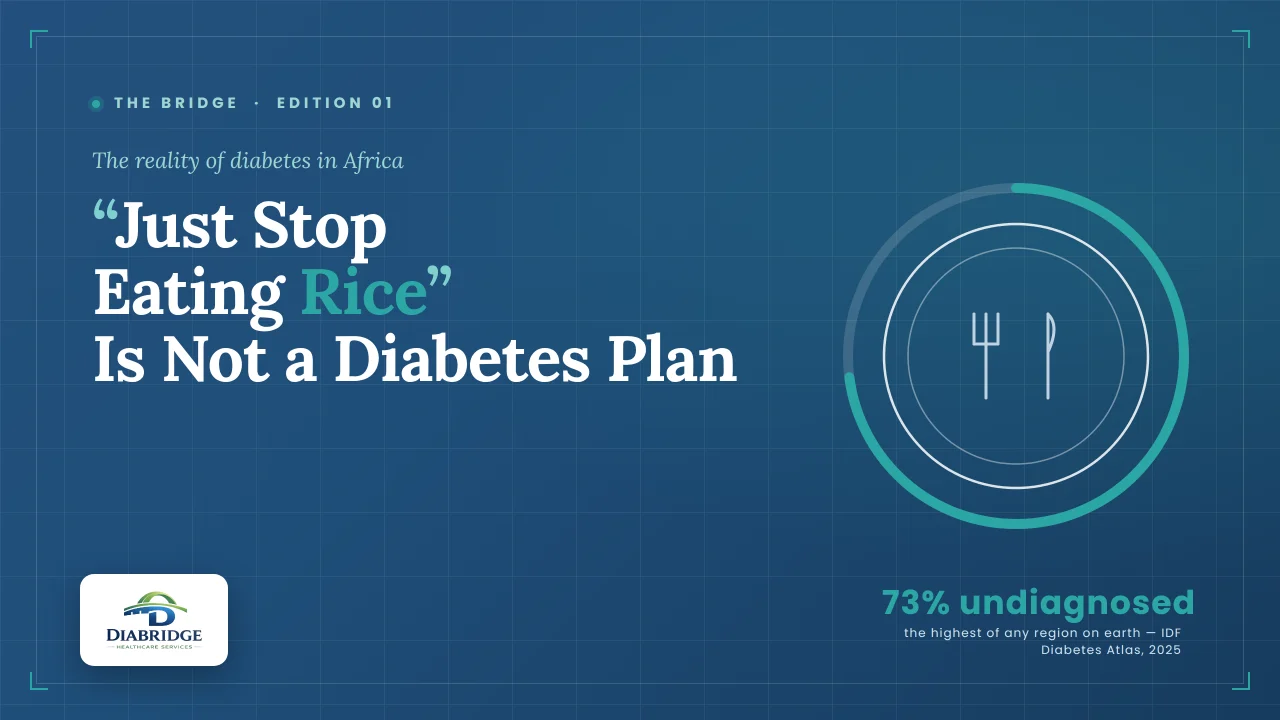
Africa now has the highest proportion of undiagnosed diabetes of any region on earth, around 73%. Nearly three in four adults living with diabetes don’t yet know they have it. The region also faces the fastest projected growth on the planet: a 142% rise to roughly 60 million adults by 2050 – and it carries that burden on the lowest diabetes spend in the world, about 1% of global expenditure. (IDF Diabetes Atlas, 11th edition, 2025.)
Read those numbers together and a pattern appears. This is not a continent that doesn’t care about diabetes. It is a continent being asked to absorb the world’s fastest-growing diabetes burden with the world’s thinnest support – often using education models quietly imported from health systems that look nothing like its kitchens.
Here is what twenty years at the bedside taught me: most people don’t fail at diabetes because they lack willpower. They fail because the conditions for success were never put in place.
Behaviour-change researchers describe three ingredients: capability (do I actually understand what to do?), opportunity (does my environment make it possible?), and motivation (do I believe it’s worth it?).
“Avoid carbs” gives a person none of the three.
It doesn’t teach her how to portion her rice instead of fearing it. It doesn’t show her which local foods steady her glucose and which spike it. It doesn’t sit with her long enough to make the plan actually hers.
“A diet sheet is information. Education is transformation.” They are not the same thing, and we have spent years confusing the two.
The fix isn’t exotic. It’s structured, culturally honest education, delivered by trained local educators who know that the answer to garri is not “stop eating garri” – it’s “here is how garri fits into a managed day.”
It’s teaching with jollof on the table, not a stock photo of a salad. It’s checking whether a patient can actually do the thing, not just whether she was told.
Global clinical standards are good. They are not the problem. The problem is the missing bridge between those standards and the local plate – and far too often, nobody is standing on it.
That bridge is the entire reason DIABRIDGE exists, and it’s the question this newsletter will keep returning to:
How do we take world-class diabetes care and make it genuinely deliverable in Lagos, in Accra, in the wards and clinics where the real work happens?
In the editions ahead, I’ll share what’s working, what isn’t, and what the data is really telling us – from the clinic floor to the policy table.
If you’ve ever watched a patient be blamed for a system that never taught them, this newsletter is for you.
Subscribe – and let’s build the bridge together.
Dorathy Oparaeche
Founder & Clinical Lead
DIABRIDGE Healthcare Services
Over to you: What’s one piece of diabetes advice you’ve heard that simply doesn’t fit real life where you live? We’d welcome your perspective through DIABRIDGE.”
Sources
International Diabetes Federation (2025). IDF Diabetes Atlas, 11th edition. https://diabetesatlas.org/
Michie, S., van Stralen, M. M. and West, R. (2011). The behaviour change wheel: A new method for characterising and designing behaviour change interventions. Implementation Science, 6, 42. https://doi.org/10.1186/1748-5908-6-42
The Bridge is intended for healthcare professionals and organisations. It provides general information and does not constitute individual medical advice.
Subscribe to The Bridge
A short email each month when a new edition is published, with a link to read it in full.
Related Insights
-
The Bridge
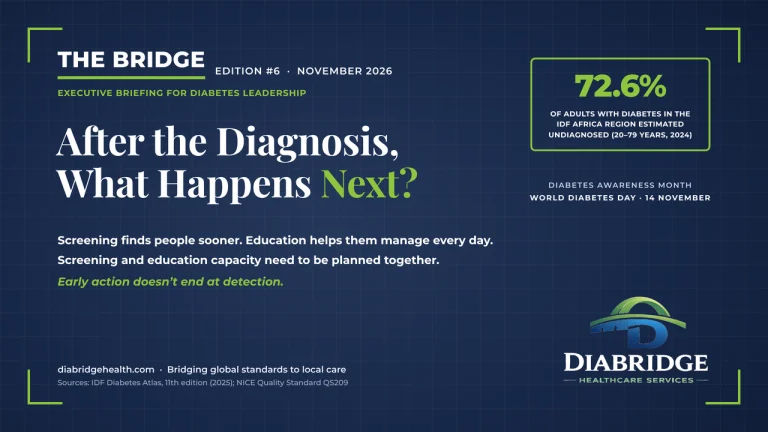
After the Diagnosis, What Happens Next?
Early action doesn’t end at detection. Why screening and structured diabetes education must be planned together.
-
The Bridge
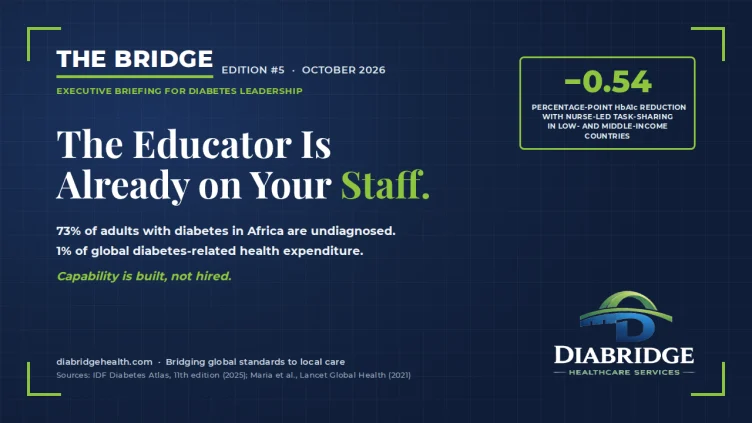
The Educator Is Already on Your Staff
The educator your hospital needs may already be on your staff. This edition explores how structured training, supervision and clear accountability can build diabetes education capability within existing teams.
-
Conversations
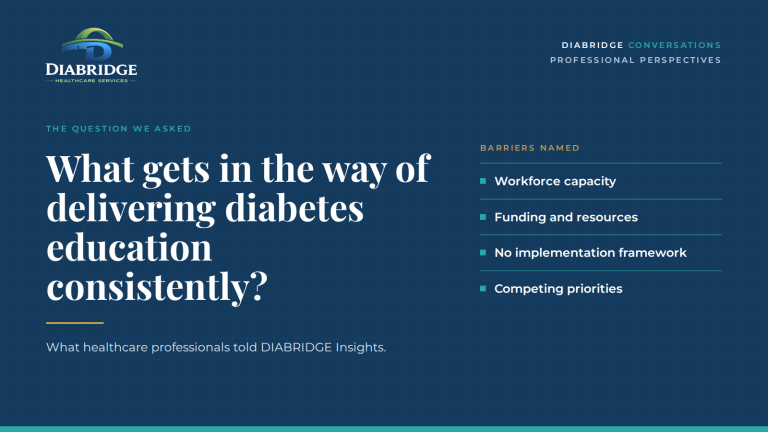
What gets in the way of delivering diabetes education consistently?
Our first DIABRIDGE Conversation asked healthcare professionals one question: what is the greatest barrier to delivering evidence-based diabetes education consistently? Their answers informed DIABRIDGE Insights Executive Brief 01.
Read about What gets in the way of delivering diabetes education consistently?